
Photo sharing
Are Disposable Cameras Worth It at a Wedding? (The Real Math)
Ten tables of disposable cameras run $250–$500 once developing is done, and about half the frames come back unusable. What film genuinely gets right at weddings, where it breaks down, and the hybrid setup most couples land on.
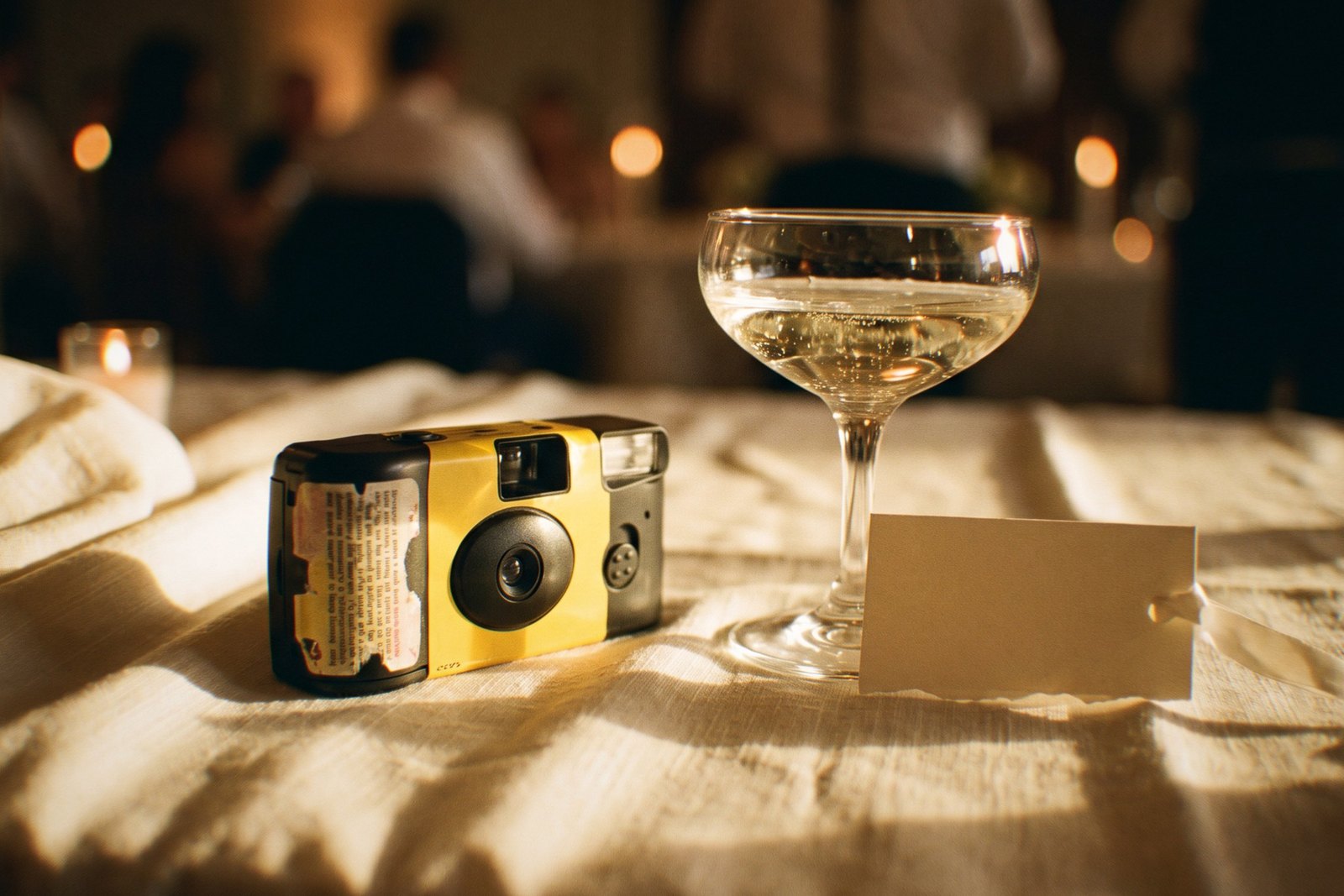
Somewhere around 2022, wedding tables started sprouting little plastic cameras again, and they haven’t stopped. It’s easy to see why. Film photos look like memories feel: warm, grainy, slightly imperfect in a way that phone cameras spend billions of dollars trying not to be. Handing your guests a disposable says something charming, too. Shoot anything. There’s no delete button. We’ll find out together in three weeks.
We’re a photo-sharing company, so you might expect us to talk you out of film. We won’t. Disposables do something real at a wedding. But they also cost more than most couples expect, return fewer usable frames than anyone admits, and quietly stop working the moment the lights go down. So here’s the full accounting, the love letter and the receipts, and the setup that gets you the grain without gambling the night on it.
Why disposable cameras came back
Disposables returned because perfection stopped being the point. A decade of increasingly flawless phone photography made the flaws valuable again: the harsh little flash, the light leaks, the surprise of frames you forgot anyone took. For guests raised on infinite retakes, a camera with 27 chances and no screen is a small thrill. You wind it with a thumb. It clicks like a toy. Someone’s grandmother knows exactly how to use it and someone’s nephew has never seen one.
There’s also the wait, which sounds like a drawback and functions like a gift. Three weeks after the wedding, when the professional gallery is still in editing and the honeymoon tan is fading, an envelope of prints arrives and the whole day happens again. Couples describe the film batch as the second-best mail they’ve ever gotten. We believe them.
What ten tables of film actually costs
The sticker price of a disposable camera is the smallest number in this story. A full ten-table setup, from purchase to scanned photos in hand, runs $250 to $500. Here’s where it goes.
| Line item | Typical range | Notes |
|---|---|---|
| Cameras, 10–12 | $100–$220 | $10–$18 each; wedding-branded versions cost more |
| Developing, per camera | $12–$20 | Drugstore counters and mail-in labs |
| Digital scans | Often included, sometimes $3–$8 extra | Ask for the highest resolution offered |
| Shipping or two store trips | $0–$25 | Mail-in labs both directions |
| Total, all-in | $250–$600 | Plus a two-to-five-week wait |
That’s the one-per-table baseline. Planning sites usually advise more, one camera per five to seven guests, and at 15 to 20 cameras for a hundred people the same math walks toward $600. However you slice it, each camera lands near $40 all-in once developing and scans are paid, which is the number to hold in your head: every table’s little plastic charm is a $40 lottery ticket.
Two costs never make the table. The first is time: labs quote one to three weeks and busy summer weekends stretch it. The second is the reorder impulse, because 27 exposures per table evaporate faster than anyone plans for. The cake hasn’t been cut and table six is out of film.
What actually comes back from the lab
Plan on roughly half the frames being unusable, and you’ll be planning accurately. Ten cameras is 270 exposures. A realistic envelope from the lab sorts into three piles. The failures: dance-floor frames beyond the flash’s ten-foot reach, motion blur from enthusiastic hands, a thumb, the ceiling, six identical attempts at the centerpiece. Depending on how dark your venue ran, that’s 100 to 150 frames gone.
The middle pile is fine-not-special: posed table groups, decent daylight shots, things your photographer got better versions of anyway. Couples who’ve run the experiment describe it in blunter terms. “My mom did this 15 years ago when she got married,” goes one of the most-quoted lines in a long Weddingbee thread on the subject, “spent a fortune developing them and then proceeded to throw every picture out.” Another guest reported the cameras were shot dry “within the first 10 mins of sitting there,” all selfies, before dinner even landed.
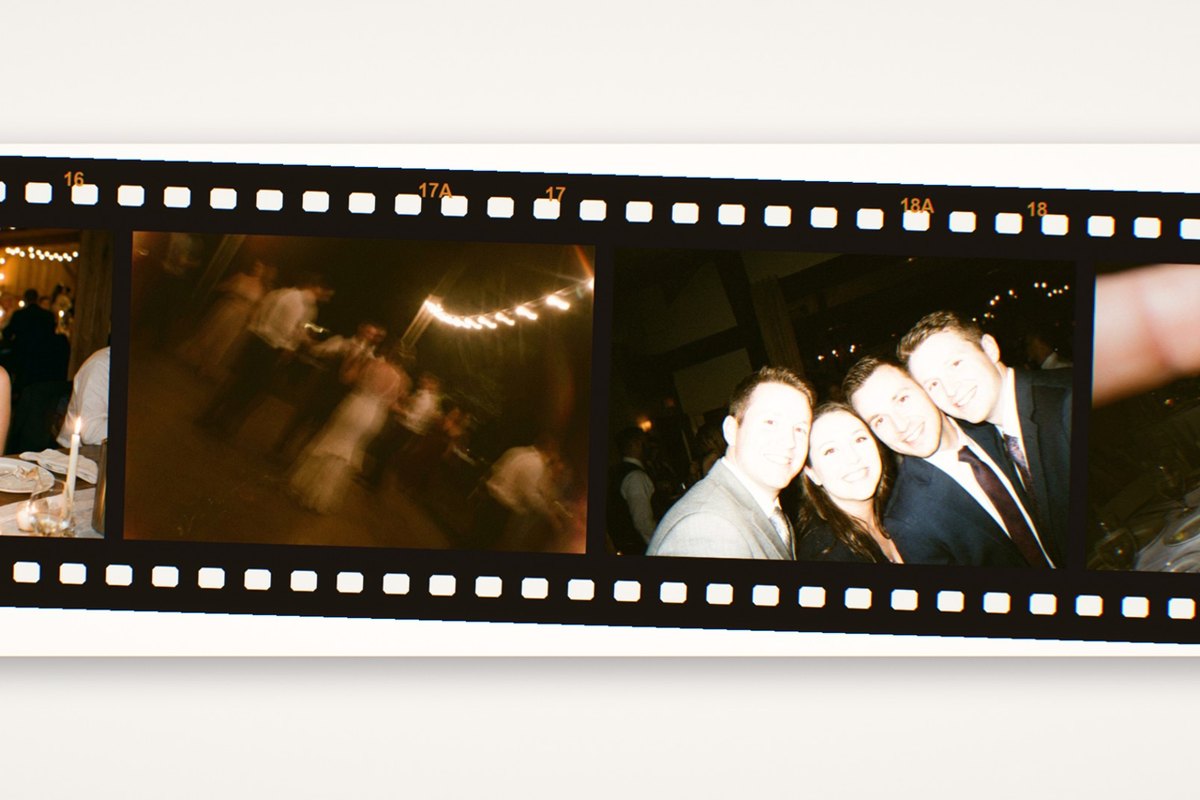
Then there’s the third pile, and the third pile is why people keep doing this. Fifteen or twenty frames of lightning in a bottle. Your college roommate mid-story, lit like 1997. The flower girl’s shoe-level view of the aisle. A flash-lit kiss nobody staged. These photos have a texture that no phone and, honestly, no professional can reproduce, because their whole quality is that nobody skilled was holding the camera.
Film at a wedding is a lottery where the losing tickets cost real money and the winning tickets are priceless. Buy some tickets. Just don’t make it the retirement plan.
Where disposables shine
Used deliberately, film earns its table space. Put cameras where the light is: cocktail hour on a patio, dinner tables while the sun is still doing the lab’s work for it, the getting-ready suite with its big windows. Daylight frames from a disposable come back looking like an editorial shoot; that’s the grain everyone is chasing.
They’re also the best icebreaker on the table. A disposable gives shy guests a job, gives kids a safe toy with a purpose, and gives the whole table a running joke by the second course. And they produce the only physical artifact of the night that guests made themselves, which is worth something no file format matches.
Where they quietly fail
Every disposable camera at every wedding fails the same three ways, so plan around them. The flash reaches about ten feet and recharges slowly: once the lights drop and the dancing starts, most frames are underexposed noise, which means film misses the exact hours when the best candids happen. The 27 exposures are almost always gone by dinner, so the camera documents the wedding’s opening act and then lies there, spent, through the whole third act it was bought for. And everything comes back anonymous: without numbering, the envelope is 270 frames from nowhere, with no way to thank table nine for the one you framed.
There’s a quieter failure too. A camera on the table only captures people who pick it up. The guests most likely to reach for it are the ones already performing for lenses; the uncle whose deadpan commentary made the night never touches one. Film collects from the extroverts. The rest of the room needs a channel that comes to them.
The hybrid most couples land on
The setup we see working, over and over, is film for texture plus a digital channel for coverage. Four to six cameras placed where the light is good, one in the wedding party’s hands, and a zero-friction way for all hundred guests to drop their phone photos into one album the same night: printed QR cards at minimum, or tap-to-share bands if you want the drop-off to travel on people’s wrists instead of staying on the tables. (That second one is ours, so discount it as advertising and check the comparison yourself.)
The hybrid math is friendly. Six cameras all-in runs about $150–$220, the digital channel covers the dance floor and the introverts the same night, and the film envelope still lands in week three as a surprise second act. You give up nothing except the failure modes.
If you do film, do it like this
Six habits separate the couples who love their film results from the ones who quietly regret the line item.
Number every camera by table with a paint pen before the wedding. It’s thirty seconds of work and it’s the difference between “photos from nowhere” and knowing table nine deserves a thank-you card.
Buy 800-speed film if you’re given the choice. Higher ISO is the only lever a disposable has in dim rooms. Branded “wedding” disposables are usually the same Fujifilm or Kodak unit with nicer packaging and a worse price.
Put a one-line instruction card under each camera: “Flash ON indoors. Stand within arm’s-reach-times-two. Shoot people, not the centerpiece.” You’ll cut the failure pile by a third.
Assign a collector. Cameras walk away in pockets at the end of the night; a designated basket and one person sweeping tables at last call saves two or three cameras’ worth of photos every time.
Choose the lab before the wedding, not after, and ask for the highest-resolution scans they offer. A mail-in lab with good scanning beats a drugstore counter if you can stand the extra days.
Set the expectation with each other: the envelope is a lottery, half the frames are gone before you open it, and the fifteen keepers will be worth all of it. Couples who expect that are delighted. Couples who expected 270 wedding photos are not.
Are disposable cameras worth it at a wedding? As the whole plan: no. As $150 of texture riding on top of a real collection setup: absolutely, and we say that as the people selling the other half. Film gives you the night the way 1997 would have seen it. Just make sure something else is catching the night as it actually happened, all of it, in focus, the same evening.
Questions couples ask
How many disposable cameras do you need for 100 guests?
The classic answer is one per table, so ten to twelve for a hundred guests. The better answer, if you’re pairing film with a digital collection channel, is four to six cameras placed where the light is good, plus one handed to the most trigger-happy member of the wedding party.
How much does it cost to develop a disposable camera in 2026?
Budget $12–$20 per camera for developing plus digital scans at a drugstore or mail-in lab, on top of the $10–$18 you paid for the camera itself. Rush service and higher-resolution scans cost more. All-in, each camera lands near $40, so a ten-to-fifteen-camera wedding runs $250–$600 for the full cycle.
Do disposable camera photos actually come out at a wedding?
Some do, and the good ones are wonderful. Plan on roughly half the frames being too dark, blurred or accidentally pointed at the ceiling. The fixed flash reaches about ten feet, so dance-floor and dim-reception shots fail most often; daylight and golden-hour frames fare far better.
What’s a good alternative to disposable cameras at a wedding?
Keep the candid spirit but go digital: a browser-based photo drop guests reach by QR card or by tapping an NFC band. You get the same unposed photos from the whole room, the same night, with no developing bill and no waiting.
