
Photo sharing
How to Get Wedding Photos From Your Guests (All 2,000 of Them)
Your guests will take roughly 2,000 photos at your wedding, and most couples never see them. Every collection method compared honestly: hashtags, shared albums, QR codes, apps, and tap-to-share bands.
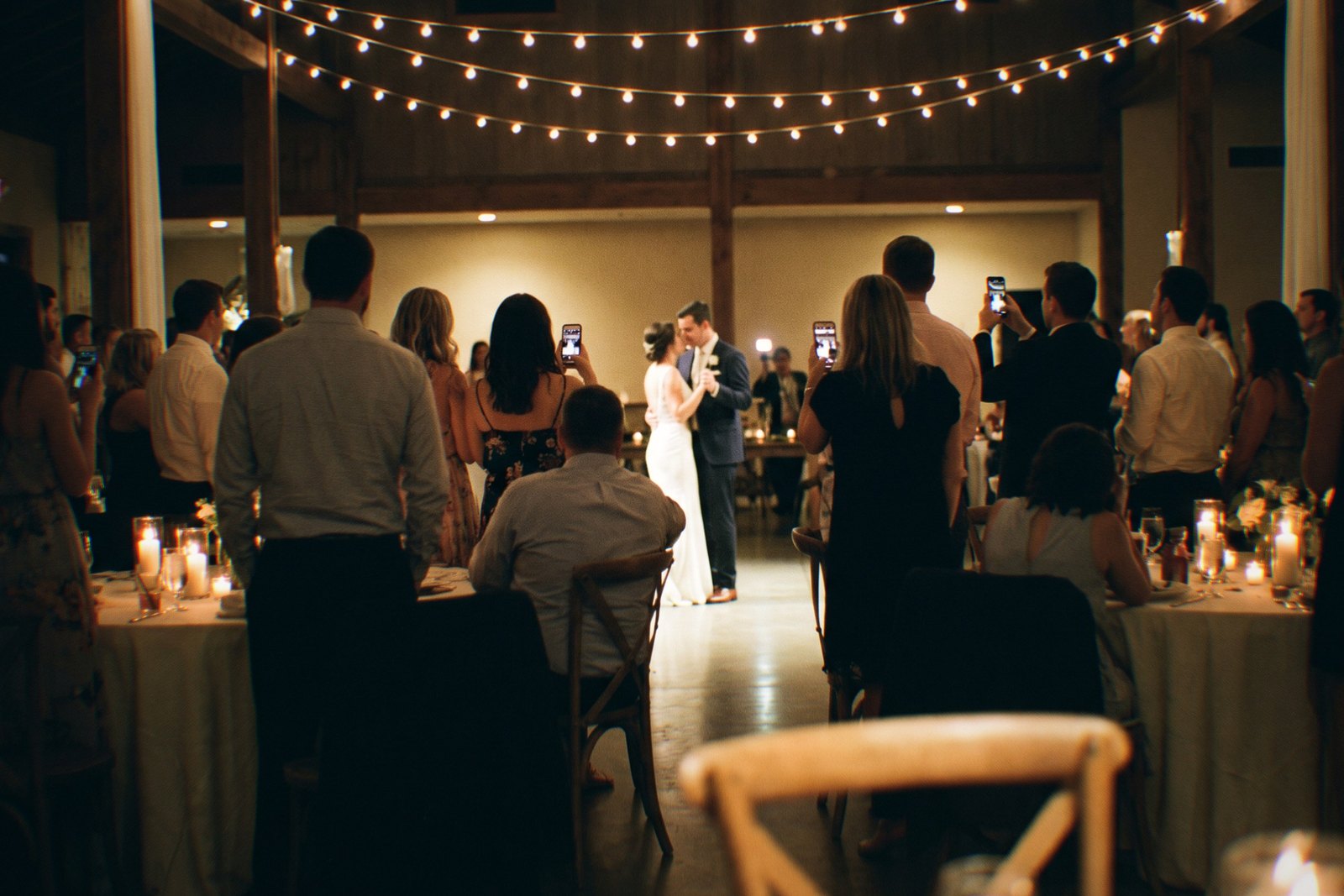
The photographer’s gallery arrives three weeks after the wedding, and it will be beautiful. That was never the problem. The problem is the other camera. A hundred of them, actually: the phones that came out during the vows, hovered over the sparkler exit, and spent the whole reception pointed at things you never saw. You watched your guests shoot all night. Then everyone flew home, and the photos went with them.
Ask around and almost every married couple tells the same story. A group text with a dozen pictures. A cousin’s Instagram story that expired before the honeymoon ended. A vague promise from an uncle about “the good ones on the real camera.” The rest, the enormous rest, is still sitting in camera rolls that will never be opened to that week again.
This is not a photography problem. Your wedding was documented from a hundred angles. It’s a collection problem, and collection problems have solutions. Here is the honest version of all of them.
The math nobody does before the wedding
A typical wedding produces somewhere between 1,500 and 2,500 guest photos. Nobody believes that number until they walk through it, so walk through it. The Knot’s annual Real Weddings Study puts the average American guest list at around 115 people. Strike the small children and the few genuine holdouts and you still have 90 to 100 adults carrying very good cameras in their pockets.
Now count the moments. Phones come out for the getting-ready hallway, the first look at the dress, the ceremony (however firmly you asked them not to), the cocktail hour golden light, every table’s round of portraits, the toasts, the cake, and then the dance floor, where they never really go away again. Fifteen photos per guest is a shy estimate. Twenty-five is normal. A few enthusiastic aunts will clear a hundred on their own.
Call it two thousand photos. Here is what typically comes back to the couple: one group text, a handful of tags, maybe forty pictures total. Two percent. The other ninety-eight percent isn’t lost because people are careless. It’s lost because no one ever built a way for it to arrive.
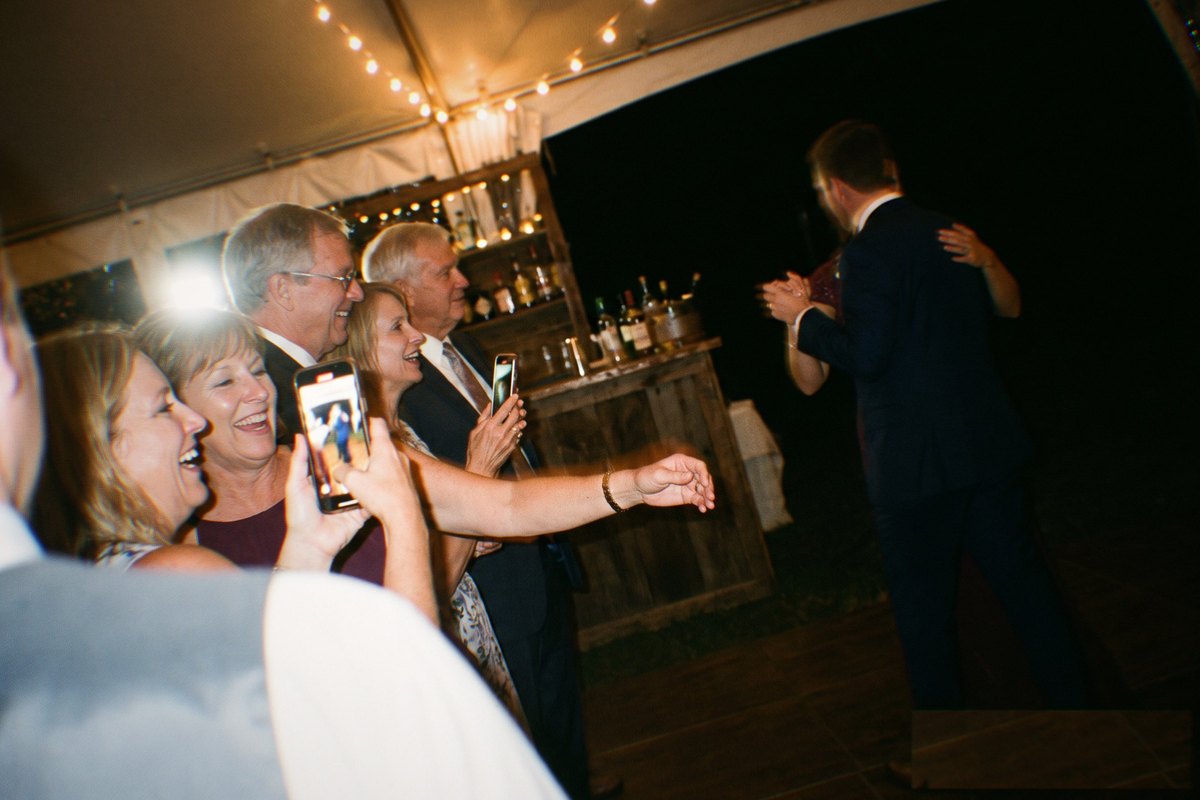
The photographer captures the day’s spine. Your guests capture its texture, and the texture is what disappears.
Why couples never see their guests’ photos
Guest photos vanish for four ordinary reasons, and none of them is that people don’t care. Understanding the frictions is what makes the fixes obvious.
It’s nobody’s job. The photographer owns the gallery, the DJ owns the playlist, and no one owns “gather two thousand photos from a hundred people.” Jobs that belong to everyone get done by no one.
There’s no single destination. Some guests text a few shots to the bride, some post, some AirDrop the maid of honor, some wait to be asked. Ten photos scattered across ten channels round down to zero.
Asking afterward feels awkward. Once the thank-you notes start, chasing your friends for photos feels like asking for a second gift. Most couples send one sheepish group message, get a 15% response, and quietly give up.
The 72-hour window closes. A phone’s camera roll is a conveyor belt. Within three days, the wedding is buried under parking receipts, screenshots and the dog. The photos still exist, but nobody will ever scroll back to find them. Whatever collection you do, it has to happen while the wedding is still the most recent thing on the roll.
Every way to collect wedding guest photos, compared
The honest comparison first, then the detail. One of these methods is ours: we make tap-to-share bands, so read that row knowing who wrote it. We’ve tried to be as hard on our own approach as on the rest.
| Method | What it asks of a guest | What couples typically get | Cost for ~100 guests |
|---|---|---|---|
| Hashtag | Post publicly, remember the tag, spell it right | A thin, public-only slice from your most online friends | Free |
| Group texts | Think of it, find your number, send | 10–40 photos, mostly from your inner circle | Free |
| Shared cloud album | Follow a link, sign in or accept an invite (Google, and iCloud albums made before iOS 27) | Decent from close family; many guests stall at the login | Free |
| QR code cards | Notice the card, scan, upload in browser | Good volume, unsorted, named only if guests type a name | $20–$80 printing, plus $0–$150 for hosting |
| Guest photo app | Download an app, create an account, for one night | Strong from the guests who install it; many never do | Free–$180 in premium tiers |
| Content creator | Nothing | A polished, curated highlight set from one person’s viewpoint | $500–$1,000/day, packages to $2,000+ |
| Disposable cameras | Pick it up, wind, shoot blind | 27 exposures per table, weeks later, half unusable, all charming | $250–$600 with developing |
| Tap-to-share bands (ours) | Tap wrist to phone, add photos | Photos all night from most of the room, each batch labeled by name | From $17.50 per band at 100, and it doubles as the favor |
Wedding hashtags: the tradition that quietly died
A hashtag was a clever fix for 2014, when feeds were public and people posted forty times a week. Neither is true anymore. Most personal accounts are private, which means their photos never surface under your tag at all, and the guests who post most enthusiastically skew toward the same five friends whose photos you’d get anyway. When PureWow surveyed readers about wedding hashtags, 85 percent said the age of the hashtag is over, and 75 percent called them “very 2017.” Keep one if you love the ritual of choosing it. Just know it’s a decoration now, not a collection system.
Shared cloud albums: great at ten people, shaky at a hundred
A shared Google Photos or iCloud album is genuinely good technology for a family trip. At wedding scale it develops cracks: iCloud albums made before iOS 27 behave differently for Android guests, Google shows each contributor’s account picture next to what they add, and either way the guest has to find the link and remember the album exists. Your college roommate will manage it. The eighty guests who aren’t in your daily texts mostly won’t. If your wedding is under thirty people and all-iPhone, this is honestly all you need; past that, the login screen is where participation goes to die.
QR code cards: the current default, with two blind spots
Printed QR cards at every place setting became the standard advice around 2024, and they earned it: no app, no account, a browser upload page one scan away. Two blind spots remain. First, the card stays on the table when the party moves, and the dance floor is where the best photos happen. Second, attribution depends on the service: some ask each guest to type a name, others collect photos anonymously, and a typed name is only as good as the guest who types it. If you go this route, print more cards than feels reasonable and put one anywhere people sit down. We’ve written about the tap alternative to a QR photo album and compared the two head-to-head in QR codes versus NFC, but a well-executed QR setup beats no setup by a mile.
Guest photo apps: the download wall
The dedicated wedding-app category solves real problems and then creates its defining one: it asks a hundred people to install software for a single evening. Some will. Your parents’ friends, the plus-ones, the guests with 3GB free on an old phone: they hit the App Store screen and put the phone back in a pocket. Junebug Weddings claims browser-based tools reach 60 to 80 percent of guests, against 30 to 40 percent when an app is required, though that post is filed as sponsored and names no source, and no independent study has measured it. Every step you add subtracts people, and a download plus an account is the two most expensive steps there are. There’s a reason the whole industry has been drifting toward photo sharing that skips the app entirely, and our comparison of 20 services shows which ones ask the least of guests.
Wedding content creators: worth it for the right couple
Hiring a content creator, a person whose whole job is shooting candid phone video and photos, is the fastest-growing line item in wedding budgets. Zola’s 2026 spend survey has them as the most-requested niche vendor, typically $500 to $1,000 a day, with deliverable-heavy packages running past $2,000. For couples who want a same-week social edit, one genuinely delivers. Two honest caveats. It’s one person with one phone, so you’re getting a curated viewpoint, not the room’s. And it costs more than most favor budgets. Think of a creator as hiring taste, not coverage. Some couples book one and collect from guests; the two solve different problems.
Disposable cameras: charming, limited, and slow
We love disposables and wrote them a whole separate love letter with the receipts attached. The short version: film on the tables produces a specific, grainy magic and roughly a 50% blur rate, at $250–$600 all-in, with a two-to-five-week wait while the lab develops what your guests shot blind. As the only plan, they collect 270 frames from a night that produced two thousand. As a garnish on top of a digital plan, they’re wonderful.
Tap-to-share bands: ours, so judge accordingly
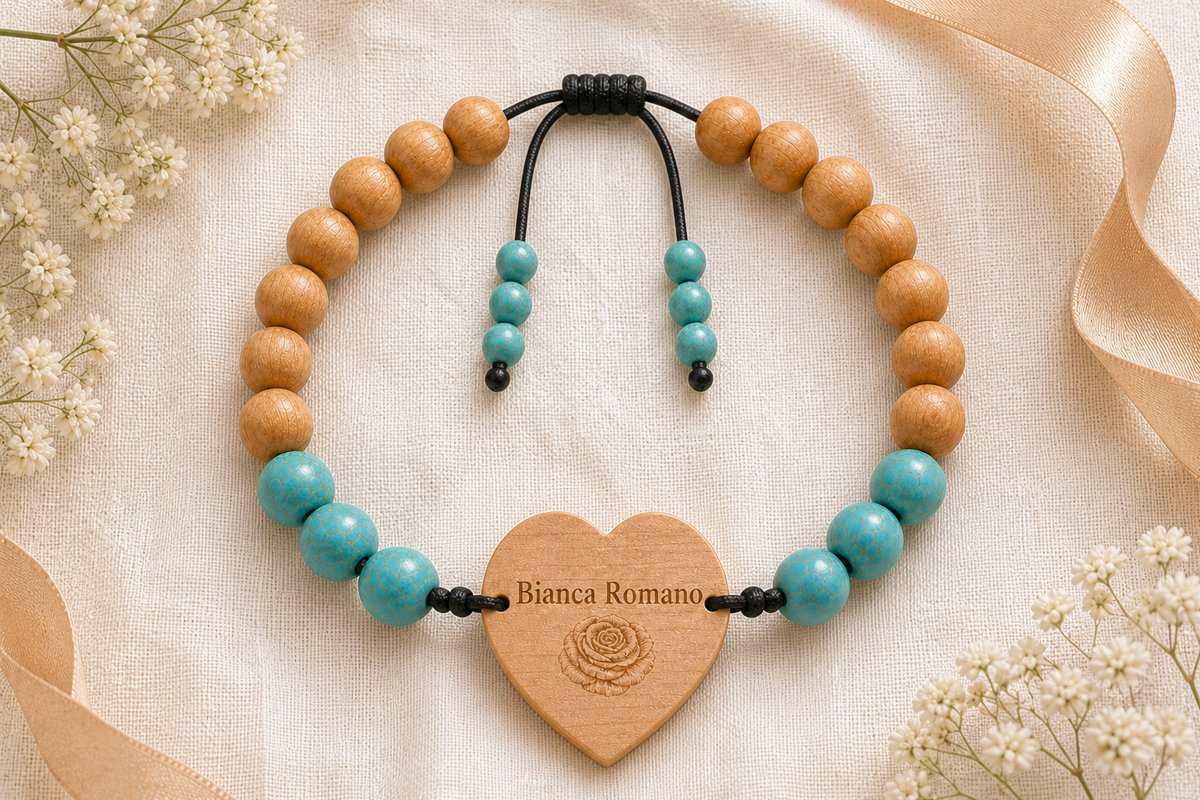
This is the one we make, so here is exactly how it works and where it falls short. Every guest gets a bead or woven-cotton band with their name engraved on a small wooden tag and an NFC chip sealed inside. They tap the band to any modern phone, theirs or a tablemate’s, and a browser page opens already knowing who they are: “Hey Katie, drop your photos here.” No app, no account, no typing. Photos land in one shared album the couple owns, labeled by guest, streaming onto a live photo wall during the reception if you want the room to feel it happening.
The honest caveats: a very old phone can’t tap, which is why every band also carries a printed QR code; and unlike a hashtag, it isn’t free. Bands run about $17.50 to $19.50 each at a hundred guests, which sounds like a photo-sharing cost until you notice it’s also the wedding favor, engraved with each guest’s name, and it goes home on their wrist instead of into the venue’s trash. Couples who’d have spent $4 a head on candles-nobody-keeps read that math differently than couples who wouldn’t have done favors at all. Both readings are fair. There’s a 35-second film of the whole loop if you’d rather see it than read it.
The setup that works no matter what you choose
Whichever method you pick, the collection systems that actually fill up share five habits. These cost almost nothing and they’re worth more than the method itself.
1. Name the destination before the wedding. One line on the wedding website and the welcome sign: “We want every photo you take. They all go here.” Guests decide in the first hour whether sharing is a thing at this wedding. Tell them it is.
2. Make it ambient during the reception. A card at every place setting, one line from the officiant after the recessional (“you may now un-silence your phones; the couple wants your photos”), one line from the DJ before the first dance. People need the reminder at the exact moment their hands are full of photos.
3. Put one person on point. Give the best man or a bridesmaid the actual job: work the room during dinner, get the shy tables to share once. One assigned person converts more photos than any technology.
4. Send the 72-hour message. This is the single highest-leverage act in guest photography. Within three days, while the wedding is still on top of everyone’s camera roll, send one warm nudge with a direct link. Steal this: “Friends! We’re still floating. One favor: whatever you shot this weekend, drop it in the album before life moves on. Blurry ones welcome. We want all of it.”
5. Decide the privacy rules up front. Some guests will hold back the loose, funny, 1 a.m. photos if they might be broadcast to all 115 attendees. Decide early who sees what: everything visible to everyone, or guest uploads visible only to you two, or (what we build, because we think it’s right) a choice per photo between public-to-the-wedding and friends-only, enforced on the server rather than politely hidden. Say the rule out loud somewhere. It raises what people are willing to share.
The photos worth chasing
Collect all of it, but know which frames you’re really after, because they’re the ones no professional can get. The hallway ten minutes before the ceremony, shot by whoever was standing there. Table nine mid-collapse at a toast that wasn’t even that funny. Your grandmother’s view of the first dance, slightly tilted, flash on. The cousins’ 1 a.m. circle, shoes off, ties around foreheads. The photographer gives you the day the way it looked. Your guests give you the day the way it felt, from inside, at wrist height and table height and dance-floor height.
Two thousand photos of that already exist in the room you’re paying for. The only question the methods above answer is whether they reach you. Pick one, name it before the wedding, and send the message inside 72 hours. The rest, for once, takes care of itself.
Questions couples ask
How do you ask wedding guests to share their photos?
Ask twice, lightly. Once before the wedding, on the website or invitation (‘we want every photo you take, blurry ones included’), and once within 72 hours after, with a direct link and a warm one-line message. Skip guilt and deadlines. If the drop-off point is one tap, guests genuinely enjoy contributing.
What is the best way to collect photos from wedding guests without an app?
Give guests a physical trigger that opens a browser upload page: a printed QR card at each place setting, or a tap-to-share band worn on the wrist. Both skip downloads and accounts entirely. The band adds automatic name attribution, so every batch of photos arrives already labeled.
How many photos do wedding guests actually take?
There is no formal industry census, so do the arithmetic: 90–120 adults with phones, each shooting 15–25 photos across getting-ready, the ceremony, cocktail hour and the dance floor, lands between 1,500 and 2,500 photos at a typical wedding. Even the low end is twenty times what most couples ever receive.
Do wedding hashtags still work in 2026?
Mostly no. A hashtag relies on guests posting publicly to their own feeds, and most accounts are private now, especially among younger guests. Keep one as decoration if you love the tradition, but don’t make it your photo-collection plan.
