
Favors & keepsakes
Are Wedding Wristbands Tacky? Only the Kind You’re Picturing
Paper bands at an open bar? Tacky, agreed. But ‘wedding wristband’ now covers everything from neon Tyvek to hand-strung stone beads with engraved wooden tags. Where the line actually sits, material by material.
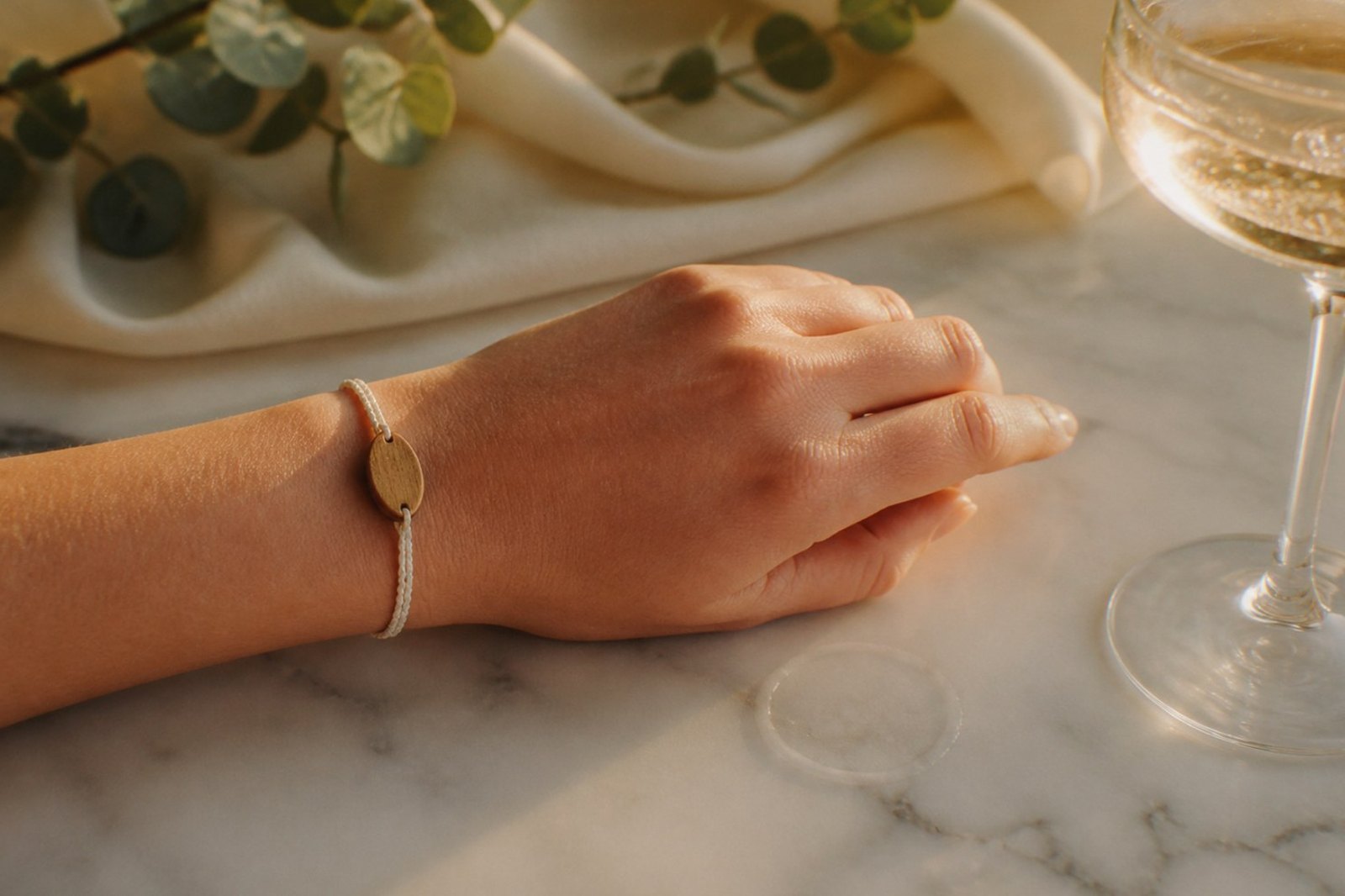
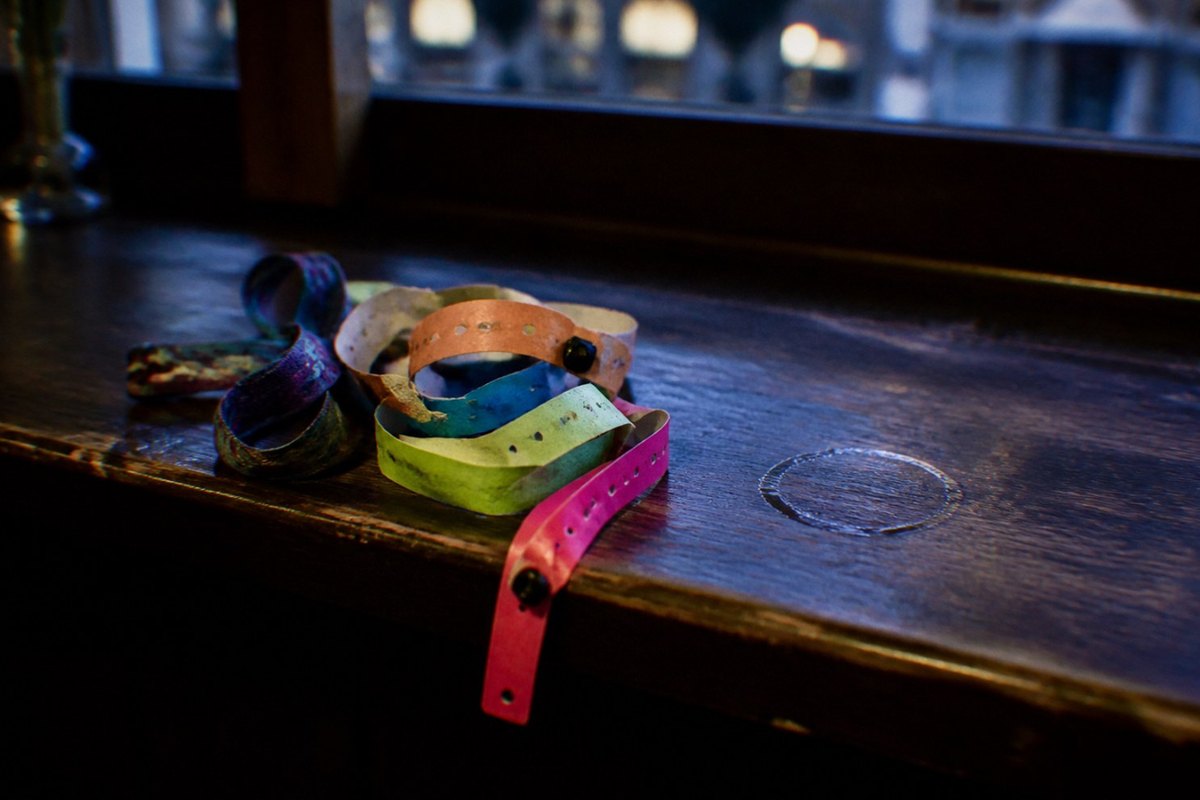
Let’s answer the question the way a friend would, not the way a vendor would: yes, some wedding wristbands are tacky. If you’re picturing the neon paper band from a festival gate, snapped onto guests at the door so the bartender knows who’s over 21, your instinct is right and you should trust it. Wedding forums are reliably brutal about exactly that setup, and the complaint is always the same: it makes a wedding feel like an event with security instead of a party among people who are trusted.
But here’s what’s changed, and why the question has gotten genuinely confusing to search: “wedding wristband” now covers two categories that share nothing but a wrist. One descends from ticketing. The other descends from jewelry. Judging both by the first is like judging place cards by parking passes.
Why the word “wristband” feels tacky in the first place
Words carry their most common context around with them, and for “wristband” that context is admission. Nearly every band anyone has ever worn was issued at a gate: festivals, water parks, hospital check-in, the club. Those bands share three traits, and it’s worth being precise, because these three traits are the actual tacky, not the wrist:
Disposable material. Tyvek, vinyl, silicone. Made for a day, priced by the roll, itchy by hour three.
The issuer’s identity, not yours. They carry a logo, a barcode, a color code. The wearer is data.
A control function. They exist to sort people: who gets in, who drinks, who belongs in which zone. Wearing one is submitting to logistics.
Put that object at a wedding and of course it jars. A wedding is the one event where everyone present was individually chosen. Tagging your chosen people like general-admission attendees sends precisely the wrong message, which is why the bar-band threads get so heated.
The three-attribute test
Flip each of those three traits and you get the other category, the one the word “wristband” is failing to describe. Run any band you’re considering through this table:
| Attribute | Reads as admission | Reads as a gift |
|---|---|---|
| Material | Tyvek, vinyl, silicone, printed polyester | Woven organic cotton, wood and stone beads, engraved hardwood |
| Name | The event’s, or a barcode | The guest’s own name, engraved |
| Function | Controls access | Gives something: a keepsake, a seat assignment, a photo key |
| Closure | Snap-lock, single-use adhesive | Adjustable drawstring or elastic, worn again by choice |
| Priced like | Ticketing supplies, by the roll | A favor, per guest |
The moment all five rows land in the right column, the object stops being a wristband in any meaningful sense and becomes what it visibly is: a bracelet. Nobody asks whether bracelets are tacky at weddings. Half the room chose one that morning.
What the elegant version actually looks like
Since we make these, let’s be concrete about what sits in the right-hand column, and you can look at real ones rather than take our word for it.
The cotton version is a macramé band, hand-knotted from organic cotton cord, with a small hardwood tag laser-engraved with the guest’s name in a serif that would look at home on your invitations. The beaded version strings real materials, turquoise, tiger’s eye, malachite, black walnut, birch, on a drawstring or elastic base, in palettes couples build to match their wedding in the 3D designer. On a linen place setting next to a handwritten name card, it reads as a small piece of jewelry made for that one person, because that’s literally what it is.
Two design choices do the heavy lifting, and they’re the same two that separate favors guests keep from favors they abandon. First, the guest’s name rather than the couple’s monogram: your initials make it a souvenir of your day, their name makes it a gift to them. Second, real materials that would pass as jewelry with no wedding attached. If a band would look wrong sold in a shop on its own merits, it isn’t ready for your tables.
The job that ends the argument
There’s one more thing the gift-column band can do that no bracelet from a shop can, and it’s the part guests talk about afterward. An NFC chip is sealed inside a charm bead. A guest brings a phone near the bracelet, no app, no account, and the couple’s private album opens: drop in the photos from their camera roll, leave a wish, watch the live gallery fill up through the night.
This matters to the tacky question more than it might seem, because tacky, at bottom, is decoration with no purpose. The band escapes the charge completely once it’s the most useful object at the reception: it’s the escort card that found them their seat, the photo-collection system working every hour of the party, and the favor that goes home on a wrist. Objects with jobs don’t read as gimmicks. They read as thought-through.
Worth saying plainly: none of it is gated. The band controls nothing, unlocks no bar, sorts no one. Skipping it costs a guest nothing but the photos they would have shared. That single fact is the whole moral difference between this object and the paper band it unfortunately shares a search term with.
If you’re still unsure, borrow this rule
Picture your most style-fluent friend, the one whose opinion you actually fear. Hand them the band you’re considering, with their name on it, and imagine their face.
A paper band with your wedding logo: polite smile, quiet dread. A silicone band in your wedding colors: “like a charity run?” A hand-strung tiger’s eye band with their name engraved on walnut, that also fills your album with their photos: they put it on. That test never misses, and it’s the only one you need.
So: are wedding wristbands tacky? The ones built like tickets, yes, always were. The ones built like jewelry with a job, no, and guests keep wearing them long after the suit goes back in the closet. The category isn’t the problem. The materials, the name, and the purpose are, and all three are choices. Make them well.
Questions couples ask
Are wristbands at a wedding tacky?
The entry-control kind, yes. Paper or plastic bands used to gate the bar or identify guests read as crowd management, and wedding forums are consistently negative about them. A hand-made cotton or beaded band given as a personalized favor is a different object in every way that matters: material, purpose and whose name is on it.
Why would wedding guests wear a wristband?
Because it’s a gift that does something, not a rule that enforces something. Guests find a band with their own name engraved on the wooden tag at their place setting, it doubles as their escort card, and one tap with any phone opens the couple’s shared album to add photos and wishes. It works all night and goes home as the favor.
Do guests have to wear the band?
No, and that’s part of why it lands well. It’s a favor, not a credential: nothing at the wedding is gated behind it. In practice most guests put it on because it’s soft, it fits any wrist with a drawstring or elastic, and it has their name on it, which is a quietly powerful thing.
What are elegant wedding wristbands made of?
The versions that read as jewelry use real materials: woven organic cotton in macramé knots, or beads in wood and stone like turquoise, tiger’s eye and black walnut, finished with a small engraved hardwood tag. The versions that read as tacky are printed polyester, silicone, paper and plastic snap-closures.
How much do nice wedding wristbands cost?
Hand-strung, name-engraved bands are priced per guest like a proper favor rather than per-roll like admission bands. At 100 bands ours run $17.50 each in woven cotton and $19.50 in beads, and the tiers slide down to $12 to $14 per band at 500 or more. That’s favor money, not ticketing money, which is exactly the point.
