
Favors & keepsakes
Wedding Favors Guests Actually Keep (and What Gets Left Behind)
Walk any venue after last dance and you’ll find the favors still on the tables. What guests genuinely keep, the three-question test for a favor worth buying, and the case for favors that do a second job.
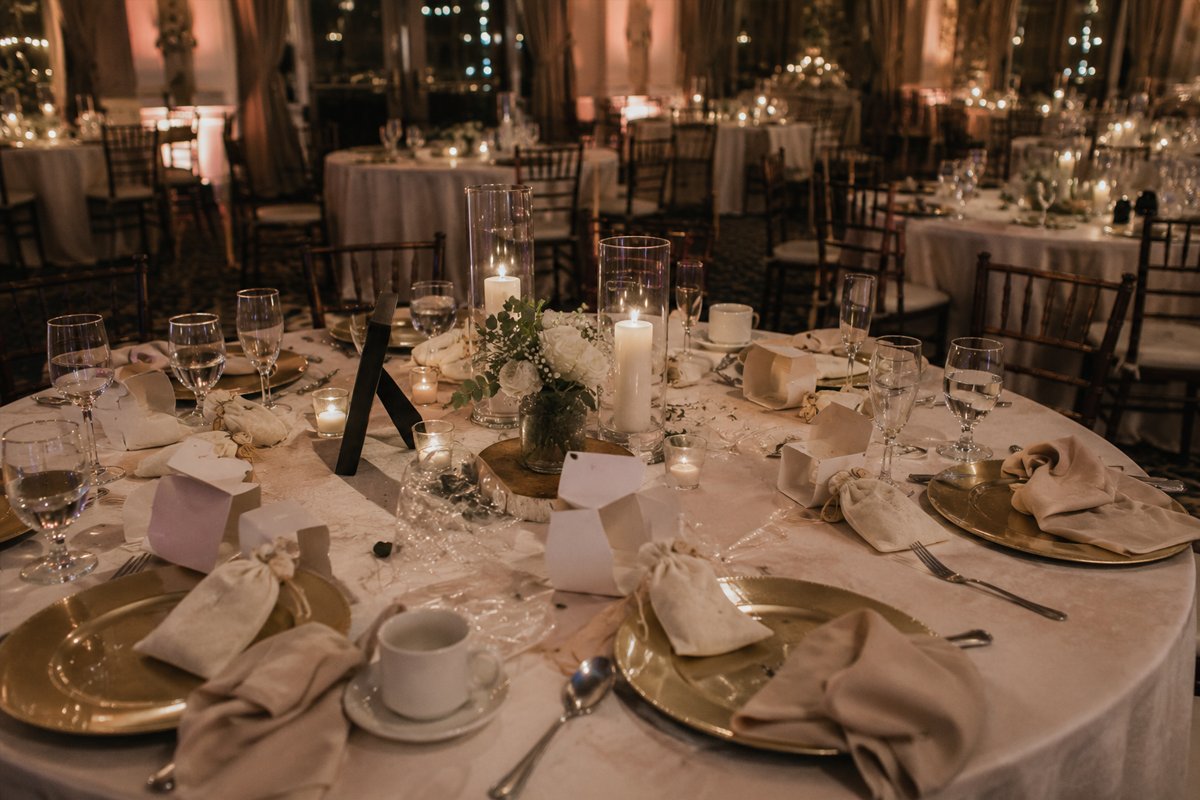
There’s a truth about wedding favors that every venue coordinator knows and almost no couple hears in time. It’s visible at 11:40 p.m., after the last dance, when the lights come up: the tables are still set with them. Little boxes with monograms. Candles poured to match the palette. Cork coasters laser-cut with a date that means everything to two people in the room and nothing to the other hundred. Somebody chose those, budgeted for them, tied one hundred tiny bows. And the cleanup crew will sweep most of them into a bin liner before midnight.
We make wedding favors for a living, which is exactly why we’re willing to say it: most favors fail. Not because guests are ungrateful, but because most favors are designed for the couple’s aesthetic instead of the guest’s life. The fix isn’t spending more. It’s asking three questions before you buy anything.
The uncomfortable truth about wedding favors
Most wedding favors never leave the venue, and the ones that do often don’t survive the month. You don’t need a research institute for this one; you need to ask anyone who works weddings what the tables look like at breakdown, or scroll any planning forum where the “are favors even worth it” thread is evergreen and heated. Couples routinely describe finding their own wedding favors at the venue’s lost-and-found, in the parking lot, or worse, at the bottom of the gift bags of the few guests who politely took one and then left it in the hotel room.
The spend isn’t trivial, either. The Knot’s Real Weddings data has 51 percent of couples giving favors, averaging about $480 on favors and party gifts, typically $1 to $5 per guest. A hundred-person wedding puts hundreds of dollars on the table, literally, and the return on that spend is decided in a single moment: whether each guest, hands full of phone and clutch and jacket at the end of a long night, decides your object is worth carrying.
That moment is winnable. But you have to design for it.
The three-question test
Before buying any favor, run it through three questions. Anything that passes two is respectable. Anything that passes all three will still exist in your guests’ lives a year from now.
One: would a guest use or wear this in a month, on a day that has nothing to do with you? Not “is it nice,” but “does it have a job in their kitchen, their bag, their wrist.” Honey gets eaten. Matches get struck. A candle in a color someone else chose is a harder sell than couples want to believe.
Two: whose name is on it? This one is quietly decisive, and we’ll come back to it, because almost every couple gets it backward.
Three: does it do something during the wedding itself? The strongest favors aren’t inert gifts waiting on a table; they’re part of the night’s machinery. An escort card that’s also the gift. A camera that’s also the entertainment. A band that’s also how photos reach the album. When the favor has a job, guests bond with it for hours before deciding, without thinking, that it’s coming home with them.
What guests keep, by category
Every favor idea on the internet sorts into five buckets, and the buckets behave very differently at midnight.
| Category | Take-home rate | The honest read |
|---|---|---|
| Consumables (honey, hot sauce, coffee, cookies) | High | Eating is effortless. Local and edible beats branded and cute. Gone by Monday, remembered fondly. |
| Genuinely useful objects (matches, openers, fans on a hot day) | Medium–high | Kept when the useful moment is obvious; the test is whether they’d buy it themselves. |
| Wearables (sunglasses, sandals for the dance floor, a band with the guest’s name) | High | Things worn during the reception leave on bodies, not in bags. The favor that’s already on you doesn’t get forgotten. |
| Living things (seeds, succulents) | Mixed | Loved by gardeners, doomed in carry-ons at destination weddings, dead by August on most windowsills. |
| Couple-branded décor (monogrammed anything, date-stamped trinkets) | Low | Souvenirs of someone else’s milestone. Guests feel guilty tossing them, so they abandon them at the venue instead. |
The pattern across every bucket: favors get kept when they’re honestly consumable, honestly wearable, or honestly useful. The graveyard is the middle, where things are none of those but have a wedding logo on them.
The personalization paradox
Here is the mistake hiding inside the word “personalized.” Couples personalize favors with the thing most meaningful to them: their names, their date, their monogram. But an object carrying someone else’s names is, by definition, a souvenir, and souvenirs of other people’s milestones have a short shelf life in anyone’s home.
Guests say this part out loud when you ask them. “If it is monogrammed or personalized to the couple in any way, I won’t be taking it,” goes one representative answer in a Weddingbee thread asking guests which favors should stop existing, a thread where “it will honestly go in the trash” does a lot of work.
Flip the name. An object carrying the guest’s name is not a souvenir. It’s a gift, chosen for them, made for them, impossible to mistake for the neighbor’s. It says we thought about you specifically in a way no monogram can. Coordinators see this play out mechanically: place settings with the guest’s name on the favor itself (not just the card) almost never get left behind, because abandoning an object with your own name on it feels different from abandoning one with someone else’s.
Your initials make it a souvenir. Their name makes it theirs.
This is the single cheapest upgrade in the favor world, and it’s why the favors-that-double-as-escort-cards trend has legs: the personalization does two jobs, tells guests where to sit, and marks the object as belonging to a specific person who will, at midnight, take their belongings home.
Favors that do double duty
The favor category that’s actually growing is the one where the gift has a function at the wedding itself. The logic is sound: an object guests interact with for five hours stops being table décor and becomes their object, and its usefulness gets demonstrated instead of asserted.
The classic versions work well. Escort-card favors, where finding your seat means finding your gift. Disposable cameras on the tables, which are entertainment first and keepsake second (we wrote the full cost-and-aftermath breakdown on those). Fans at a July ceremony, flip-flop baskets at the dance floor: the useful moment is built into the day.
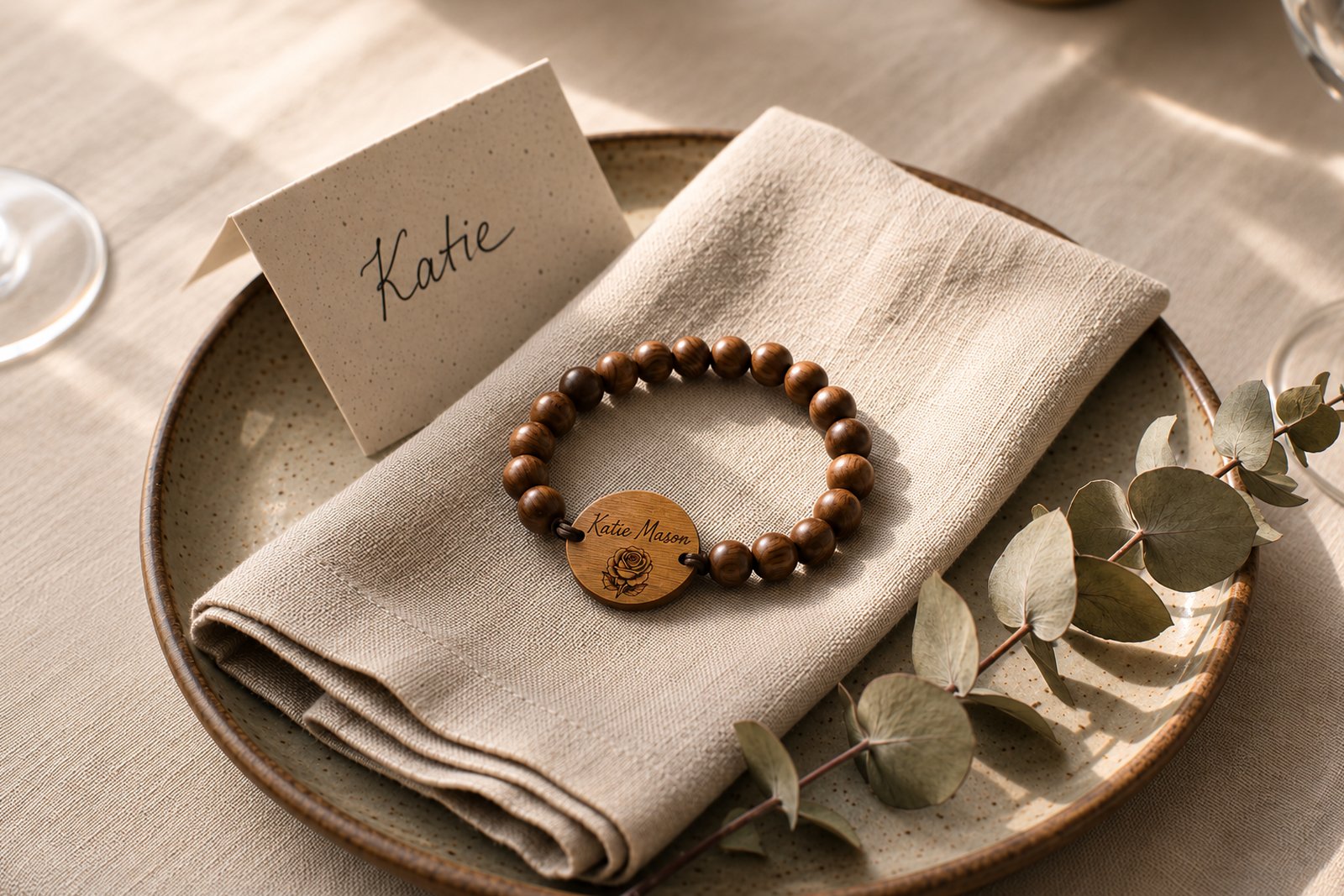
And then there’s the version we make, so take this paragraph as the founder talking: a bead or woven-cotton band, engraved with each guest’s name on a small wooden tag, with an NFC chip inside. It’s the escort card (their name is on it), the photo system (they tap it to drop photos into your shared album all night), and the favor (they wear it home, and it’s theirs in the most literal sense). At a hundred guests the bands run $17.50 to $19.50 each, which is real money next to a $4 candle, but it’s three line items in one object, and it’s the object guests are already wearing when they walk out the door. Couples pick the beads and the engraving in the 3D designer, and the wedding’s whole palette rides home on a hundred wrists. If you’d rather see that than read it, the lookbook shows real bands up close.
The honest caveat, as always: a favor that does jobs costs more than a favor that doesn’t. If the budget says $3 a head, local honey beats everything, and we mean that.
If you’d rather skip favors entirely
Permission granted, and we say that as a favor company. No guest has ever left a wedding sad about the absence of a trinket. If nothing passes the three-question test at your budget, the graceful exits are well-established: put the money into late-night food (the single most remembered “favor” in any planning forum thread), pour it into the welcome drinks, or make a donation in your guests’ honor and say so with one lovely line on the menu card. Any of those reads warmer than a hundred abandoned candles.
The worst outcome isn’t skipping favors. It’s buying them out of obligation, watching them get left behind, and feeling that small sting when the venue asks if you want to take the leftovers home. You will not want to take the leftovers home.
A favor is a bet that an object can carry a feeling out of the building. Most of the bets on most of the tables fail by midnight, and they fail predictably: wrong name, no job, no life beyond the wedding. Bet on things guests eat, wear or use, put their name on it instead of yours, and give it work to do while the night is still going. The favors that pass that test don’t end up in the bin liner. They end up in the group chat three weeks later, still on someone’s wrist.
Questions couples ask
Are wedding favors necessary?
No. Favors are a tradition, not an obligation, and guests remember food, music and how welcome they felt long before they remember a trinket. If a favor doesn’t pass the will-they-use-it test, putting the budget into late-night snacks or a donation in guests’ honor is a genuinely classier move.
How much should you spend on wedding favors per guest?
The Knot’s data puts typical favors at $1–$5 per guest, with couples averaging about $480 on favors and party gifts overall, and much of that spend ends up abandoned on the tables. A better frame than price-per-favor is price-per-thing-kept: one $15–$20 item guests actually wear or use beats five forgettable ones at the same total cost.
What wedding favors do guests actually use?
Things they can consume that week (local honey, coffee, hot sauce, baked goods), things they can wear out the door (sunglasses at a beach wedding, a band with their own name on it), and things that did a job during the wedding, like an escort card or a photo-sharing key they used all night.
Are edible wedding favors better than keepsakes?
Edible favors have the highest take-home rate because eating them is effortless, but they’re gone by Monday. A keepsake only wins if guests would keep it without your wedding date printed on it. The strongest favors are either honestly consumable or honestly wearable; the graveyard is everything in between.
