
Favors & keepsakes
Destination Wedding Favors That Survive the Trip Home
Every destination wedding favor faces the suitcase test: carry-on rules, customs lines, and Cancún heat. What to hand guests who flew to be there, what to put in the welcome bag, and what actually makes it home.
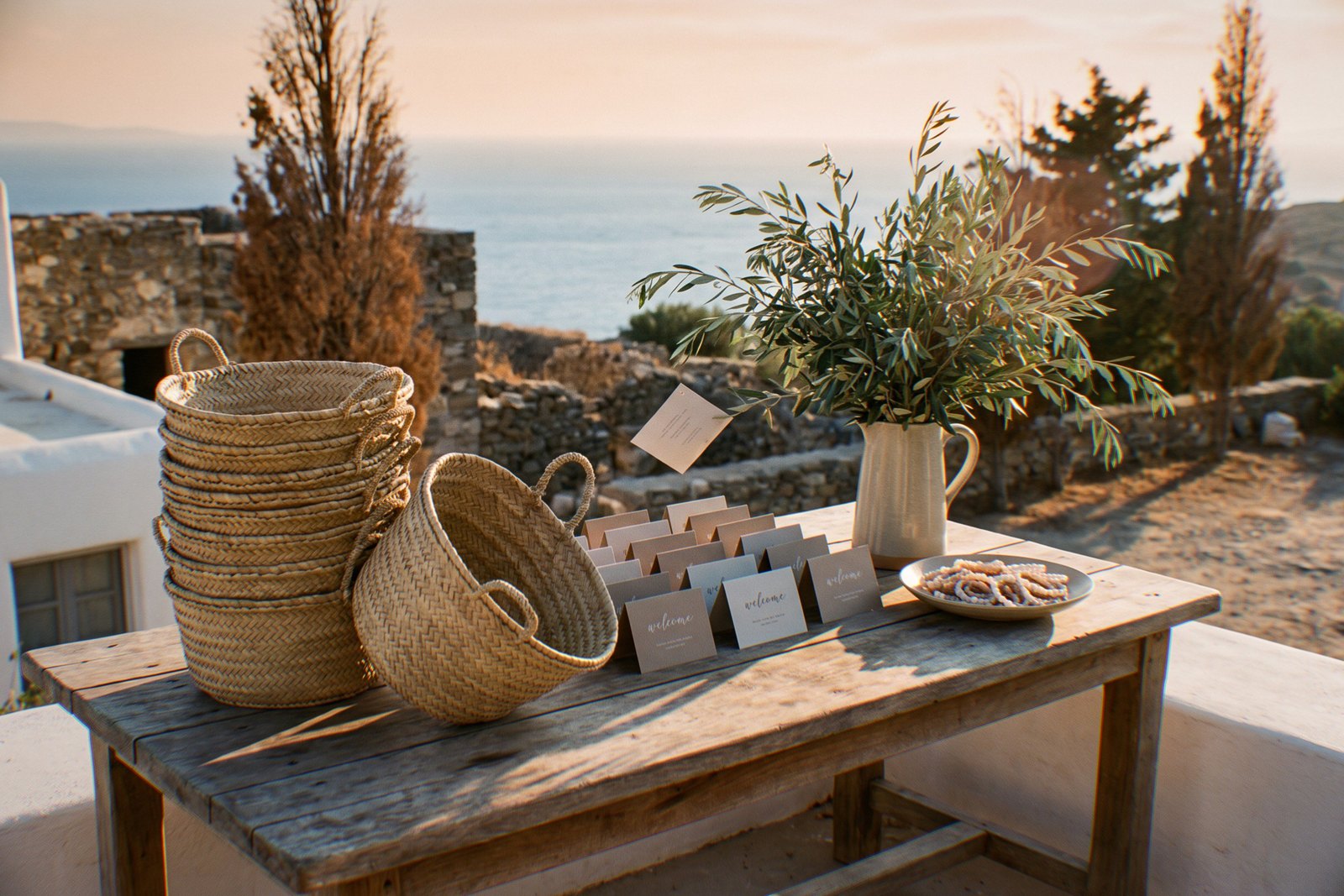
Forty-two people are about to pack for your wedding. They’ll fly with carry-ons to a coastline none of you live on, spend three days between a welcome dinner, a boat, an aisle in the sand and a long Sunday brunch, and then they’ll pack again to go home. Somewhere in that second packing, on a hotel bed with a suitcase that got heavier all weekend, every favor you gave them gets picked up and judged: does this fly home with me, or does it stay?
Destination favors live and die by that moment, and it’s a different game from a hometown ballroom. The rules are physical: airline liquids, customs forms, tropical heat. And the emotional register is different too, because these guests didn’t drive twenty minutes to attend; they bought flights. Here’s how to choose favors that honor the trip, pass the suitcase test, and, if you pick the right one, quietly solve the weekend’s photo problem on the side.
The suitcase test
Before anything goes on the favor shortlist, it has to survive four filters that hometown weddings never think about.
The carry-on rule. Most destination guests fly carry-on only. Anything liquid over 100ml, that lovely local olive oil, the signature-cocktail bottle, the full-size sunscreen, either gets checked, confiscated, or abandoned. If it pours and it’s bigger than a shot glass, it’s a problem.
The customs line. Fresh food, seeds, plants and some agricultural products can’t legally cross many borders at all. Packaged and sealed usually passes; fresh, homemade, or plantable often doesn’t. Seed-packet favors, sweet in Ohio, are contraband into Australia.
The climate. Chocolate becomes soup in a Tulum August. Candles arrive as abstract sculpture. If the favor waits on an outdoor welcome table for two hours, it needs to be something 90-degree shade can’t ruin.
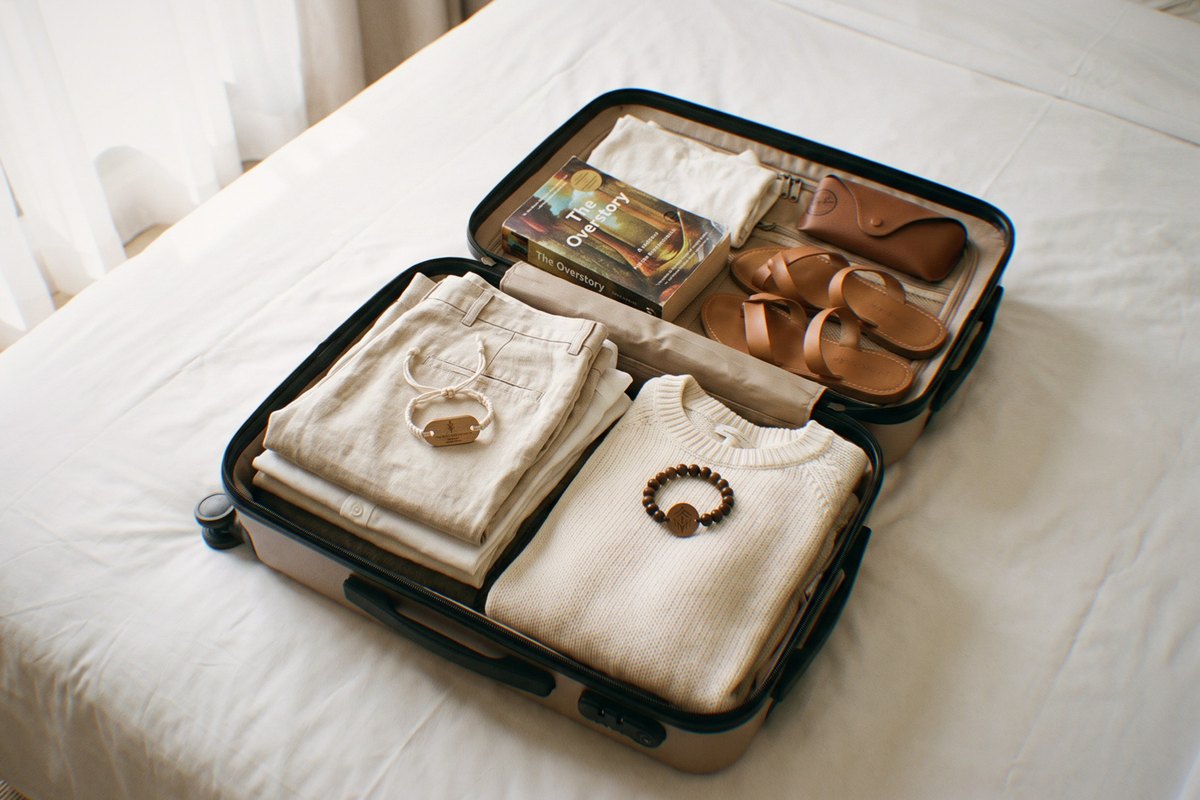
The weight-and-shape audit. A guest’s suitcase is a zero-sum space, and it’s already full of shoes for three dress codes. Flat, light and small earns a spot. Boxed, breakable and bulky gets left, guiltily, next to the minibar.
Run every idea through those four, and most standard favor lists evaporate. What’s left is the good stuff: things that are local, consumable, wearable, or genuinely small.
The welcome bag, rethought
The destination tradition is the welcome bag, and the standard version is overstuffed with good intentions: branded tote, water, six snacks, a paper map nobody will consult over their phone, sunscreen sachets, a koozie. By Sunday, the tote holds a wet swimsuit and the rest is scattered detritus for housekeeping.
The teardown isn’t that welcome bags are wrong; it’s that they’re doing too many jobs badly instead of three jobs well. The three: hydrate and feed people who just traveled (water plus one local snack actually worth eating), orient them (a one-page itinerary card, beautiful enough to photograph, since the schedule will be photographed and texted around), and hand them the weekend’s one keepsake.
One thing they wear all weekend beats ten things in a tote.
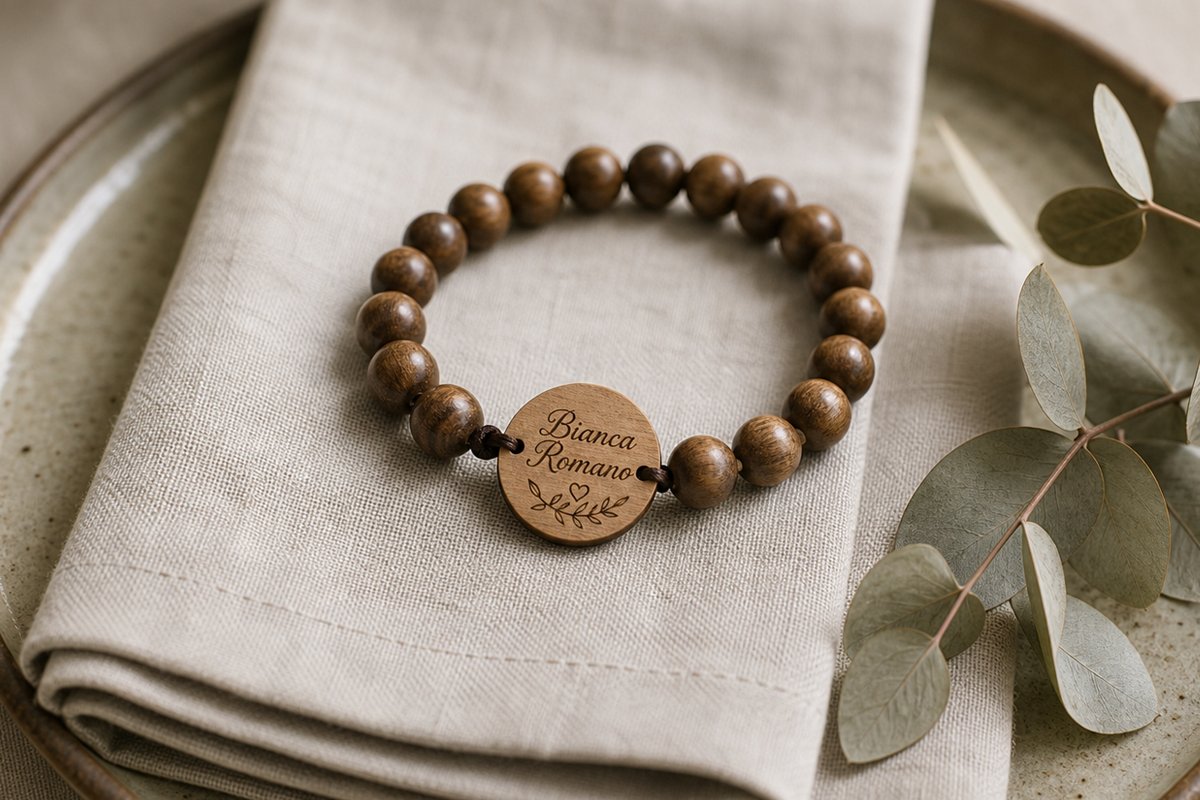
That last slot deserves the budget. It’s the difference between a bag of stuff and a gift: something with the guest’s own name on it, that works the whole weekend, that boards the plane on a body instead of in the zero-sum suitcase.
What works, by destination
| Destination | What survives | What fails, and why |
|---|---|---|
| Beach & tropical | Sunglasses, woven fans, pareos, beaded wearables, sealed local coffee or hot sauce | Chocolate and candles (heat), fresh fruit baskets (customs, if flying on), anything that dies wet |
| Mountain & vineyard | Mini preserves or honey (checked bags), local tea, knit or leather smalls | Full wine bottles (carry-on rule; buy-local cards work better), fragile glassware |
| European city | Flat artisan goods: prints, linen, small ceramics well-wrapped, packaged sweets | Bulky boxed items, anything heavy; guests are usually multi-city with tight luggage |
| Cruise & islands | Sealed consumables, wearables, reef-safe minis | Fresh or homemade food (strict ship and border rules), plants and seeds (often prohibited) |
The pattern is the same one that governs favors guests actually keep at any wedding, tightened by travel physics: consumable, wearable, or useful, and now also flat, sealed, and heat-proof.
The multi-day photo problem, and the wearable answer
Here’s the thing destination couples discover in week one of planning: this isn’t a wedding, it’s a three-day event across four venues. Welcome dinner Thursday. Boat or excursion Friday. Ceremony and reception Saturday. Brunch Sunday. Photos happen at all of them, on forty phones, and the collection problem that’s hard at one reception multiplies across a weekend, because a QR card on Saturday’s dinner table was never at the Thursday welcome party or on Friday’s boat.
The channel that covers a whole weekend has to travel with the guests, which at a destination means it has to be worn. This is where we should disclose: we make exactly this, so audit the logic yourself. A beaded band with each guest’s name engraved on a wooden tag goes into the welcome bag; from Thursday on, guests wear it, and bringing a phone near the bracelet opens the couple’s single shared album, where guests select and upload their photos: boat photos, ceremony photos, 1 a.m. beach-bar photos, all labeled by name. At a beach wedding, wood-and-stone beads read as vacation jewelry, not technology, which is precisely why people keep them on. Resorts spent the last decade teaching everyone to wear their room key on their wrist; our manufacturing partner makes those hotel key bands too, so the manufacturing DNA is literally the same, pointed at a photo album instead of a door.
The honest ledger, as ever: bands are a favor-budget item, about $17.50–$19.50 per guest at a hundred bands and less at volume, so they make sense when they replace the keepsake line rather than add to it. Destination guest lists skew small; at forty-five guests the whole thing costs less than one night of the room block. And because everything is engraved to order, this is a decision for the months-out window, with a proof you approve before paying, not a week-of save.
Getting favors there: the logistics nobody warns you about
However good the favor, it still has to arrive, and destination logistics have eaten more favor budgets than bad taste ever did. Three routes work.
Ship ahead, to a named human. Two to three weeks of buffer, addressed to your venue coordinator by name with your wedding date on the label, and a confirmation email chain you can wave at the front desk. Resorts lose unnamed boxes; they rarely lose the coordinator’s.
Fly it in the wedding party’s bags. For anything flat and light, a hundred favors split across six checked bags is the most reliable courier on earth. This is where flat-packed wearables and paper goods shine and boxed glassware doesn’t.
Buy the consumables on arrival. Local snacks and drinks bought at the destination are fresher, cheaper, more authentic, and skip customs entirely. Assign it to a bridesmaid with a rental car and a Thursday morning.
And one distribution rule that outperforms every logistics trick: hand favors out at the welcome party, not the reception. A favor given Thursday works for you all weekend, appears in every photo, and can’t be forgotten on a table Saturday night, because it’s already on the guest.
A destination favor carries a heavier sentence than a hometown one: thank you for crossing an ocean for us. The trinket that says it best is the one still on your college roommate’s wrist in the airport security line Monday morning, holding sixty of her photos you’d never have seen otherwise, having passed the only test that matters, the one on the hotel bed, next to the suitcase, Sunday afternoon.
Questions couples ask
What do you put in destination wedding welcome bags?
Water, one local snack worth eating, sunscreen or after-sun in travel sizes, a printed one-page itinerary, and one keepsake guests wear or use all weekend. Skip the branded tote-fillers: anything guests wouldn’t pack for themselves is weight they’ll leave in the room.
How do you get wedding favors to a destination wedding?
Three workable routes: ship ahead to the venue coordinator with two to three weeks of buffer and a named contact, split the load across the wedding party’s checked bags for anything light and flat, or buy consumables locally on arrival. Check the destination’s customs rules before shipping food, plants or alcohol.
What are good favors for a beach wedding?
Heat-proof and sand-proof wins: no chocolate, no candles in a hot venue, nothing that dies wet. Sunglasses, pareos, woven fans, local hot sauce or coffee in checked-bag sizes, and wearables like beaded bands hold up. If it can sit in 90-degree shade for an afternoon and still be a gift, it qualifies.
Do you even give favors at a destination wedding?
Plenty of couples skip table favors entirely and put the budget into the welcome bag or a group excursion, and no guest minds. Those who do give favors spend more here than anywhere: The Knot’s data puts favor-and-gift budgets around $600 for domestic destination weddings and $750 for international ones. Smaller guest lists make the math work: one keepsake guests wear or use beats scattered trinkets.
